Act five
The Story
Assembled from his own letters, his own website, the backs of his own record sleeves, and a university's filing cabinet.
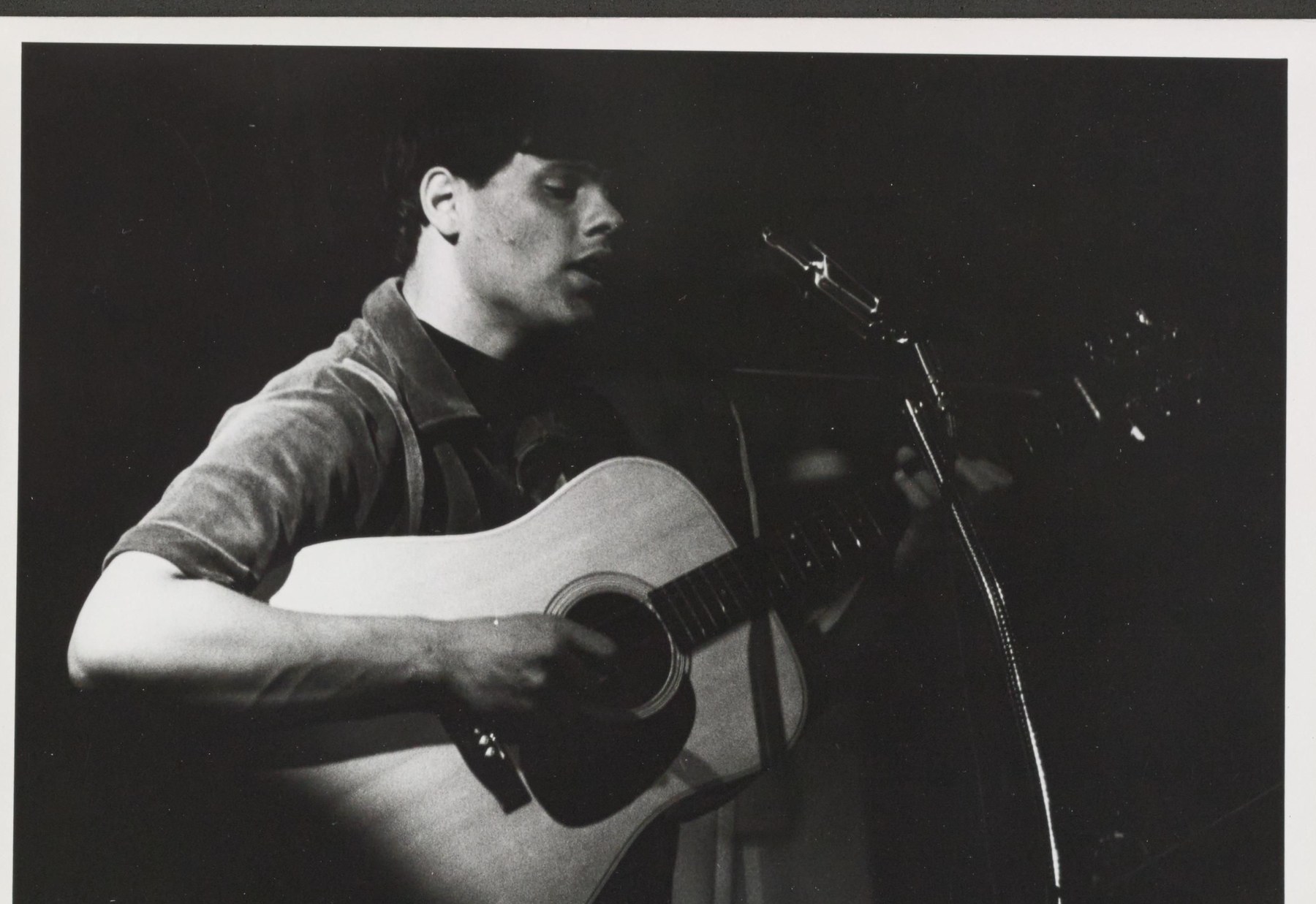
He was born in the Valley of the Moon, learned to play in Berkeley, sang at the Greek Theatre at sixteen, drove to Chicago on a whim, and put out seven records on a label he ran himself out of whatever town he happened to be living in. Almost none of it was ever digitised. This is where we keep what's left.
Every recording of Dev Singh's that exists anywhere online, gathered in one place — two rips of a 45 that never got reissued, a dulcimer instrumental he hosted on his own website in 2003, and twenty-five minutes off a reel in a university archive.
Space to play or pause · ← → to skip · sources credited in the About section
Seven under his own name, two 45s with no date on the label, and one — Keepers — that we know existed only because he listed it himself. Click any sleeve.
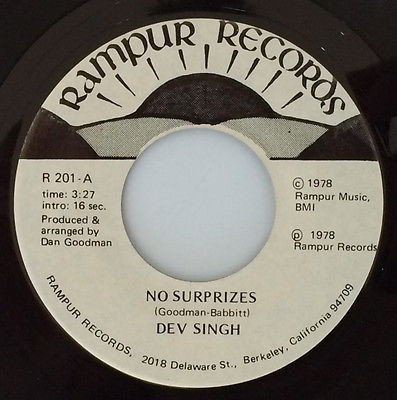
In 1977 a folk singer walked into a Bay Area studio and cut a crossover soul side — horns, a groove, a saxophone break at the end. Rampur pressed it, it went nowhere, and it sat in crates for thirty-five years.
Then the northern-soul diggers found it. They had no idea he had four folk albums. One of them wrote under a YouTube rip: “Think Dev was more of a Psych/Rock artist, but this is certainly not that — a lovely Cross Over soul dancer, a beautifully produced number, and Dev's voice definitely works on this.”
It has never been reissued and it is on no streaming service. Only the flip side, “Maple Leaf Summer,” ever got a second life — he re-recorded it for Heartscape in 1996.
Barry Olivier, who ran the Berkeley Folk Music Festival, kept a folder marked Singh, Dev — Box 40, Folder 11. It went to Northwestern in 1974 and was digitised in 2020. Here is all of it: the negatives, the flyers, the letters, and the songs he typed out and mailed off, hoping.
Nothing in the folder matches that.
In September 1969 he recorded a nine-song album in Richmond and San Luis Obispo. It was never pressed. In August 1970 he typed out three more songs and mailed them with a tape. Nobody has heard these recordings — but he typed the words, and the words survived.
Assembled from his own letters, his own website, the backs of his own record sleeves, and a university's filing cabinet.
Some of these he printed on his own website with no date attached — the way a working musician keeps a folder of nice things people wrote. We have not found all the originals yet.
This is an unofficial, non-commercial archive built by people who went looking for one song and fell down a very long staircase. It exists because a folk singer with a gorgeous tenor made seven records over thirty years, mostly paid for out of his own pocket, and then the internet more or less forgot — except for a rare-soul 45 that collectors chase without knowing whose voice it is.
Everything here was already public: an open university archive, a record database, a record label's own catalogue, and the artist's own website as it was captured by the Internet Archive between 2002 and 2016. We host nothing that is commercially available — if you want Heartscape, buy it, it's two clicks away and he should get the money.
If you have found this: nobody here is selling anything, and nothing on this page is meant to embarrass you. We think the records are wonderful. If there is anything you would like changed, corrected, or taken down, say the word and it's done, no argument and no delay. And if you ever want to tell the story yourself, there is a room full of people who would listen.
Open questions. If you can close any of these, you will be the first person on earth to do it.
Corrections and contributions are the entire point of a site like this. Bring us a scan, a ticket stub, a memory, a tape.